

What Pro Visuals Actually Cost (and Why)
Four budget tiers, real 2026 day rates, where to spend first, and where to find gear, crew and locations for free or cheap.
As an independent artist planning your own visual shoots, it can seem impossible to get transparent pricing, clarity on what you actually need, what it actually costs, and why. This document changes all of that.
We lay out what filmmaking personnel, equipment, and post-production you can afford and expect according to your budget.
The four budget tiers
Tier 1 — No budget $0–$500 · Tier 2 — Small budget $500–$4,000 · Tier 3 — Medium budget $4,000–$10,000 · Tier 4 — Big budget $10,000+
If you're here, we're going to assume you fall into the first three categories, but 4i Productions can help you no matter what budget you're working with.
Three things every music video needs: an artist, a camera, and an editor. You can be all three.
Here's how that looks.
Tier 1 — No budget
If you're operating with a bit more money, you can get other creatives involved who want to work on passion projects for their portfolio. Collaborating with other talented independent creatives can increase the production value and make production go by way more smoothly.
Tier 2 — Small budget
At this stage, you can wear fewer hats and have fun with a more experienced group of creative professionals while keeping other costs (location, costumes, etc.) lower — or spend more budget on more expensive equipment with fewer people involved. It depends on your level of comfort, knowledge, and experience with filmmaking.
Tier 3 — Medium budget
At this level, you can realize a grand-scale vision with lots of qualified professionals to handle the logistics of planning and executing your visual music project.
Tier 4 — Big budget
What are expected rates?
For production roles, most creatives charge via day rate — the amount of money they'll want per day of shooting. If you only shoot for one day, you pay them for one day, but most large-scale music videos shoot for two days or more.
What you can expect:
| Role | Rate | Unit |
|---|---|---|
| DP / Director | $200 – $1,000+ | per day |
| Grip & gaff crew | $100 – $2,000 | per day, each |
| Assistant director | $100 – $2,000 | per day |
| Camera package | $200 – $800+ | per day, w/ lenses |
| Editor | $20 – $200+ | per hour |
| Editor, per project | $200 + | portfolio-rate floor |
PRO TIP — 4i Productions works with creatives in Salt Lake City, Los Angeles, and New York, and editors from all around the world, to get you the best rates for your project in any budget tier. Get a free quote
Where to get the most bang for your buck
1. Lighting
A lot of people think a more expensive camera equals better production value, but it's not true. Most filmmakers will agree the best investment you can make is in lighting — or in creative professionals who are trained to see and arrange shots according to natural lighting.
PRO TIP — Weapons was shot on an iPhone for $60 — the cost of an iPhone stabilizer from Amazon.
Even if you can't afford expensive lights, training the eye to see composition and good lighting helps elevate the perceived production value of your visual project dramatically. In that case, hiring an experienced DP may be worth it even without an expensive camera or lighting package.
2. Editing
Others might argue your best investment is in editing. Taking even poorly-lit iPhone footage and adding color grading, graphics, and some VFX in post can make your visuals look intentional and creative. Editing is also where you have the most creative freedom to try new visual directions, hooks, effects, and more.
3. Creativity
One thing that money can't buy: creativity, passion, and authenticity. A music video at any budget can be an incredible piece of art by being an honest expression of you, the artist. Remember to enjoy the process — the best music video is one made by you, with the tools you have available, while authentically expressing yourself.
It can be overwhelming to watch hours and hours of filmmaking and editing tutorials. If you'd rather focus on making music, 4i Productions works with talented editors all over the world to get you the most qualified editor for the job at a price that fits within your budget. Get a free quote
Build your own budget
Pick a level for each role. Costs and your estimated total update as you go.
Pro tip: you can add natural-looking hand-held motion and zooms in the editing phase to reduce the bore of a tripod shot.
Just a fun tool — these are ballpark ranges per shoot day, not quotes.
Free & cheap artist resources
Unlock the resource list
Enter your email in the box on this page and every locked section here opens — plus we'll send you the files to keep.
Filmmaker vocab
| Term | Definition |
|---|---|
| DP | Director of Photography — also called the videographer or cinematographer. Runs the camera and the look of the image. |
| AD | Assistant Director — the person who runs scheduling, the shot list, and crew management. |
| CLT | Chief Lighting Technician — the head gaffer, the person in charge of lighting. A very important art form; works closely with the DP to make your shots look good. |
| Gaffer | The electrician who builds and runs the lighting setup under the CLT or DP. |
| Guerilla | Shooting fast, small, and mobile — minimal gear, minimal crew, often without permits or a locked location. A style, not a compromise. |
| Rigging | The hardware and setup that holds lights, cameras, and grip equipment safely in place — stands, clamps, trusses, mounts. Bad rigging is the most common way people get hurt on a set. |
| Grip | Crew who rig and move everything that shapes or supports light and camera — stands, flags, silks, dollies. |
| Day rate | What a crew member charges per day of shooting, regardless of hours. The standard unit for production roles. |
| Camera package | The camera plus everything it needs to actually shoot — lenses, media cards, batteries, monitor, support. |
| Silks & screens | Fabric and reflective panels used to soften, bounce, or block light. Cheap, and they do more for your image than a better camera. |
| Crafty | The snack and drink table on set. Not optional — a fed crew works better and comes back. |
| Call sheet | The document sent out before a shoot day with times, locations, contacts, and who's needed when. |
| BTS | Behind the scenes — footage and stills of the shoot itself, which becomes most of your social content. |
| Color grading | The post-production pass that sets the final look and mood of the footage. |
| VFX | Visual effects — anything added or altered in post that wasn't in front of the camera. |
| Coverage | The set of angles and takes you shoot for a moment, so the editor has options to cut with. |
More resources
 Checklist
The Release Label Visuals Checklist
A four-week rollout plan, from pre-production through release, plus every platform's image and video sizes in one table.
 Breakdown
The Cutdown Matrix
Everything to pull from one music video, broken down by platform, with the export size for each and safe-area diagrams for Reels, TikTok and Shorts.
 Asset pack
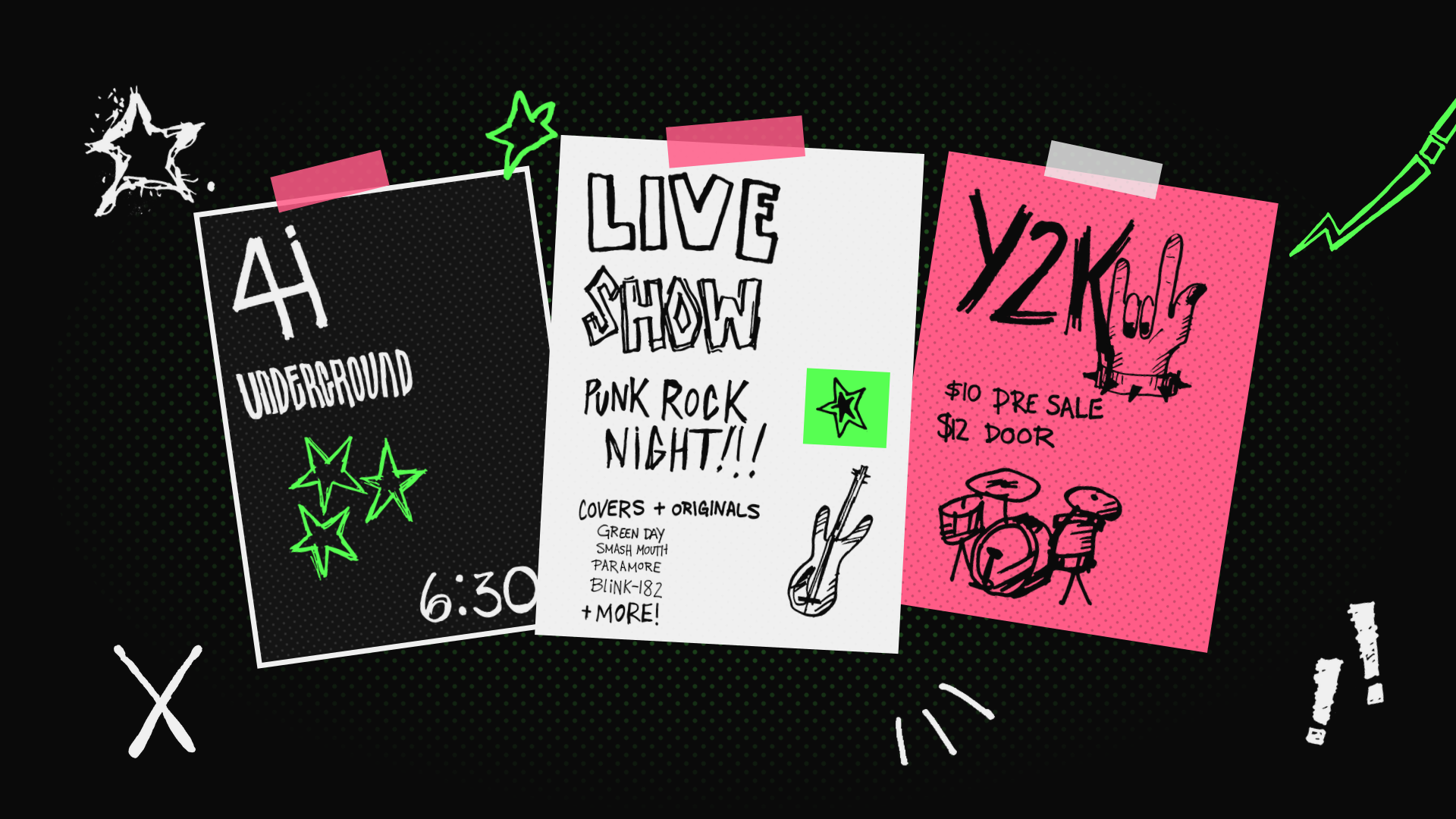
Hand-drawn Scribbles for Gig Posters
hand-drawn scribbles for mixed-media style posters.